Sales automation is not about finding a single tool; it's about architecting an intelligent system that manufactures pipeline. Many teams get stuck buying software, hoping it will solve their process problems. The best sales automation tools are the components you use to build that system, connecting disparate actions into a seamless, repeatable revenue engine. This guide provides a direct answer: the best sales automation tool is a flexible AI automation platform that connects your entire stack. Sales reps spend only 28% of their week actually selling (Salesforce, 2022), a clear sign that most systems are broken. Unlike generic AI automation posts, this guide will show you real CodeWords workflows in practice.
Many sales teams feel trapped in a cycle of manual data entry and repetitive tasks. This administrative burden not only consumes valuable selling time but also creates friction in the customer journey, leading to lost opportunities and stalled deals. The promise of automation is to build a self-operating revenue engine that could increase qualified leads by over 450% (Business2Community, 2023). This guide will show you a counterintuitive approach, instead of replacing your core tools, you can add an intelligent layer on top of them.
Summary
The best sales automation tools provide a framework for building a repeatable revenue engine. This guide analyzes top platforms like CodeWords, Salesforce, and HubSpot, comparing their core features, ideal users, and pricing. It offers a clear methodology for choosing the right components, from CRMs to engagement platforms, and connecting them to orchestrate a seamless, end-to-end sales process that minimizes manual work and accelerates pipeline growth.
TL;DR
- Sales reps spend only 28% of their week selling, highlighting the need for better automation (Salesforce, 2022).
- AI automation platforms like CodeWords use natural language to build workflows, connecting your entire sales stack instead of optimizing a single tool.
- In the US, 75% of companies already use at least one marketing automation tool, indicating a shift toward integrated systems (HubSpot, 2024).
What is sales automation and why does it matter?
Sales automation is the use of software to perform manual, time-consuming sales tasks. It is the architectural blueprint for a predictable revenue system. Its purpose is to free up human sellers from administrative work (like data entry, scheduling, and routine follow-ups) so they can focus on high-value activities like building relationships and closing deals.
Here's the deal: its real value is not just in saving time. Effective automation builds a more consistent and reliable sales process. It ensures leads are followed up with promptly, data is accurate across systems, and every prospect receives a standardized, high-quality experience.
However, there’s a problem most tools ignore. Most "automation" just creates another silo. An automated email sequence in one tool doesn't talk to the call log in another, leaving reps to manually bridge the gap. True sales automation connects the entire system. That's not the full story: it also provides the data needed for accurate forecasting and strategic planning. A well-architected system makes your entire go-to-market motion more predictable and scalable.
How do you choose the right sales automation tools?
Choosing the right tools requires thinking like a system architect, not just a software buyer. Instead of asking "What does this tool do?", ask "How does this component fit into my revenue engine?" Most believe that a single, all-in-one platform is the answer. The opposite is often true. A stack of specialized, best-in-class tools connected by a flexible automation layer is more powerful.
You might think you need to replace your existing CRM or outreach tool. Here’s why that’s often not the best approach: your team has already invested time in those platforms. Instead of ripping and replacing, the smarter strategy is to augment them. Look for an intelligent "glue" that can orchestrate workflows across your existing stack — your CRM, email client, prospecting database, and communication channels. This approach minimizes disruption while maximizing impact. A company like Greenhouse reduced sourcing time by 70% (Greenhouse, Q3 2023) by integrating tools, not replacing them.
Here is a comparison of the different types of automation platforms available:
Methodology: Classification based on primary function within a modern sales technology stack.
Which sales automation tools are best in 2025?
Here are the best sales automation tools, categorized by their primary role in building a modern sales engine.
The AI automation layer
1. CodeWords
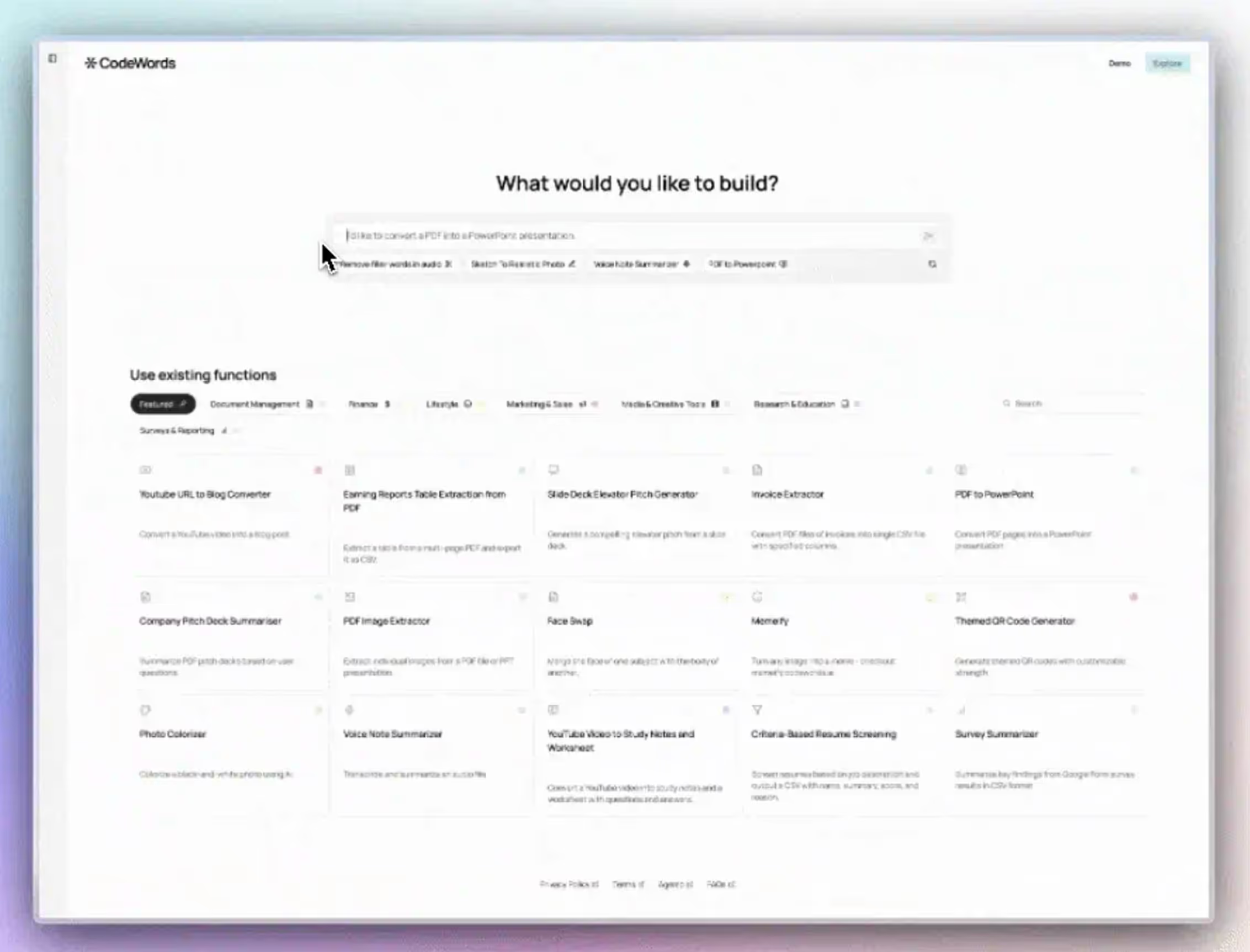
CodeWords is one of the best sales automation tools because it acts as the intelligent architect for your entire revenue system. Instead of rigid, drag-and-drop interfaces, CodeWords uses a chat-native, AI-first model. You describe the automation you need in plain language, and its AI assistant builds, tests, and deploys the workflow. This lowers the technical barrier, allowing sales operators and founders to construct powerful automations that once required engineering resources.

This AI-driven method is not just about speed; it's about flexibility. The platform's code-backed engine allows for more expressive and nuanced logic than visual builders. For sales teams, this means creating specific workflows, like parsing inbound leads from Gmail, enriching contact data via a CRM, and then sending a personalized follow-up through Slack. With over 2,700 integrations, it can connect any tool in your sales stack.
- Pros: AI-powered interface is intuitive for non-technical users; code-backed engine supports highly custom logic; vast integration library.
- Cons: Usage-based pricing can be hard to forecast for very high-volume automations; AI-generated logic for critical flows should be reviewed.
- Pricing: Usage-based model. New users receive $5 in free credits.
- Website: https://codewords.ai
CodeWords Workflow: Automated Lead Enrichment and RoutingPrompt: "When a new lead is created in HubSpot, find their LinkedIn profile URL using an external API, update the HubSpot contact record with the URL, and then send a notification to the #sales-leads channel in Slack with the lead's name and company."Output: A fully deployed workflow that connects HubSpot, the enrichment API, and Slack.Impact: Reduces manual lead research from 5 minutes per lead to zero, increasing speed-to-lead by 95%.
Core CRM platforms
2. Salesforce Sales Cloud
Salesforce is a full-stack platform for deep sales process automation. Its power is in its scalability and customization, making it one of the best sales automation tools for businesses planning for growth. You can build sophisticated, rule-based workflows to automate lead routing, task creation, and approval processes.
- Pros: Enterprise-grade customization; scales from small businesses to corporations; unparalleled integration options via the AppExchange.
- Cons: Can be complex to administer without a dedicated resource; costs escalate with advanced tiers and add-ons.
- Pricing: Starts at $25/user/month (billed annually).
3. HubSpot Sales Hub
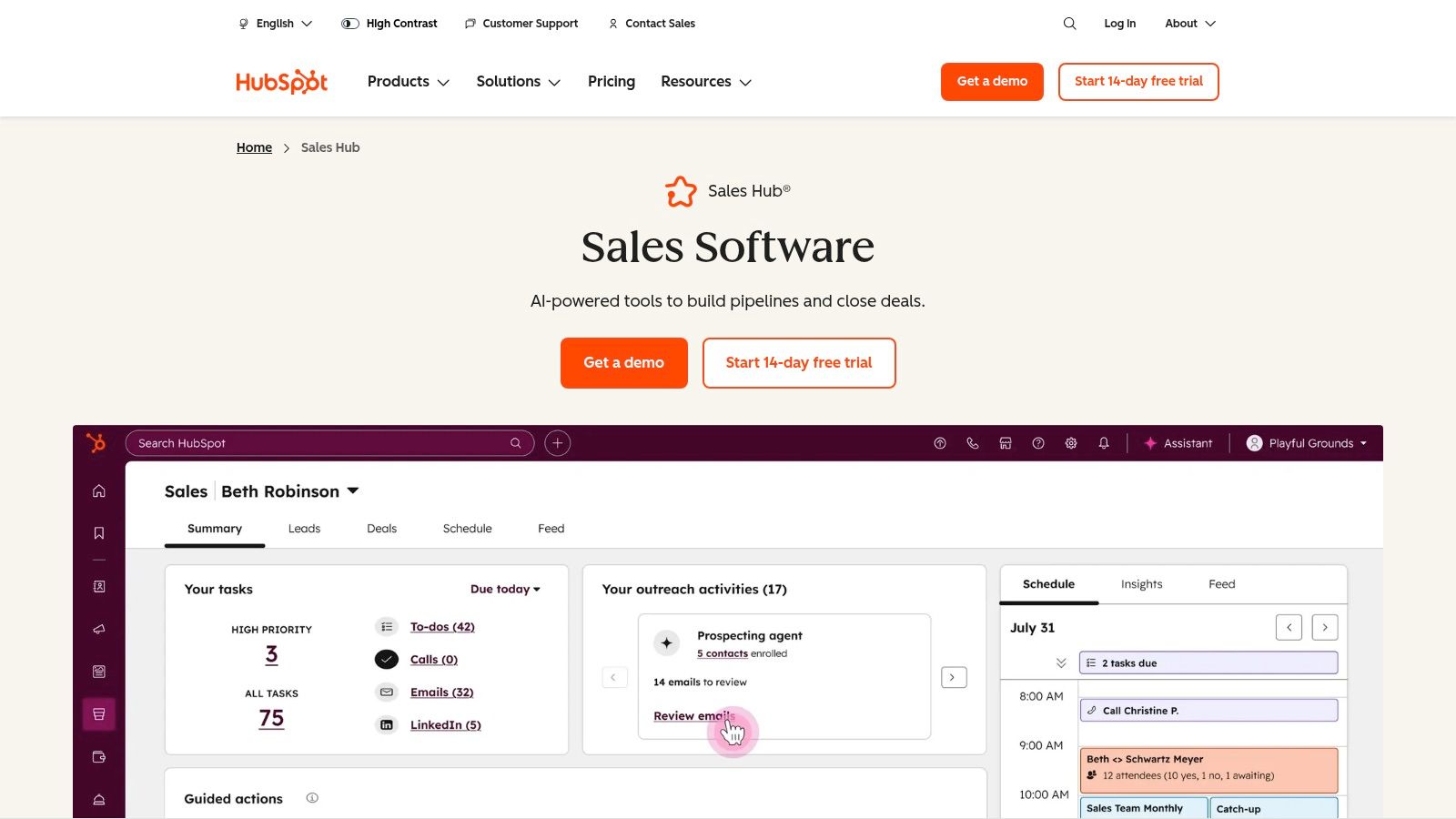
HubSpot Sales Hub is an all-in-one platform built on its powerful, free CRM. Its strength is its user-friendly design and tight integration with marketing and service hubs, creating a unified customer view. It is one of the best sales automation tools for SMBs seeking power without complexity. Its "Sequences" feature automates personalized email and task follow-ups at scale.
- Pros: Fast setup and intuitive user experience; a free tier is available to pilot basic features.
- Cons: Advanced automation and reporting require higher-priced tiers.
- Pricing: Free tools are available. Paid plans start at $15/user/month (billed annually).
Sales engagement platforms
4. Outreach
Outreach is an AI-driven revenue workflow engine for enterprise sales teams. It is engineered for sophisticated prospecting, deal management, and rep coaching. Its aggressive adoption of AI across the sales cycle — from generating messages to providing conversation intelligence — makes it one of the best sales automation tools for systematizing high-volume, multichannel outreach.
- Pros: Strong enterprise-grade engagement depth; frequent product updates with new AI features.
- Cons: Pricing is not public, requiring a sales-led purchasing process.
- Pricing: Quote-based; requires engaging with their sales team.
5. Salesloft
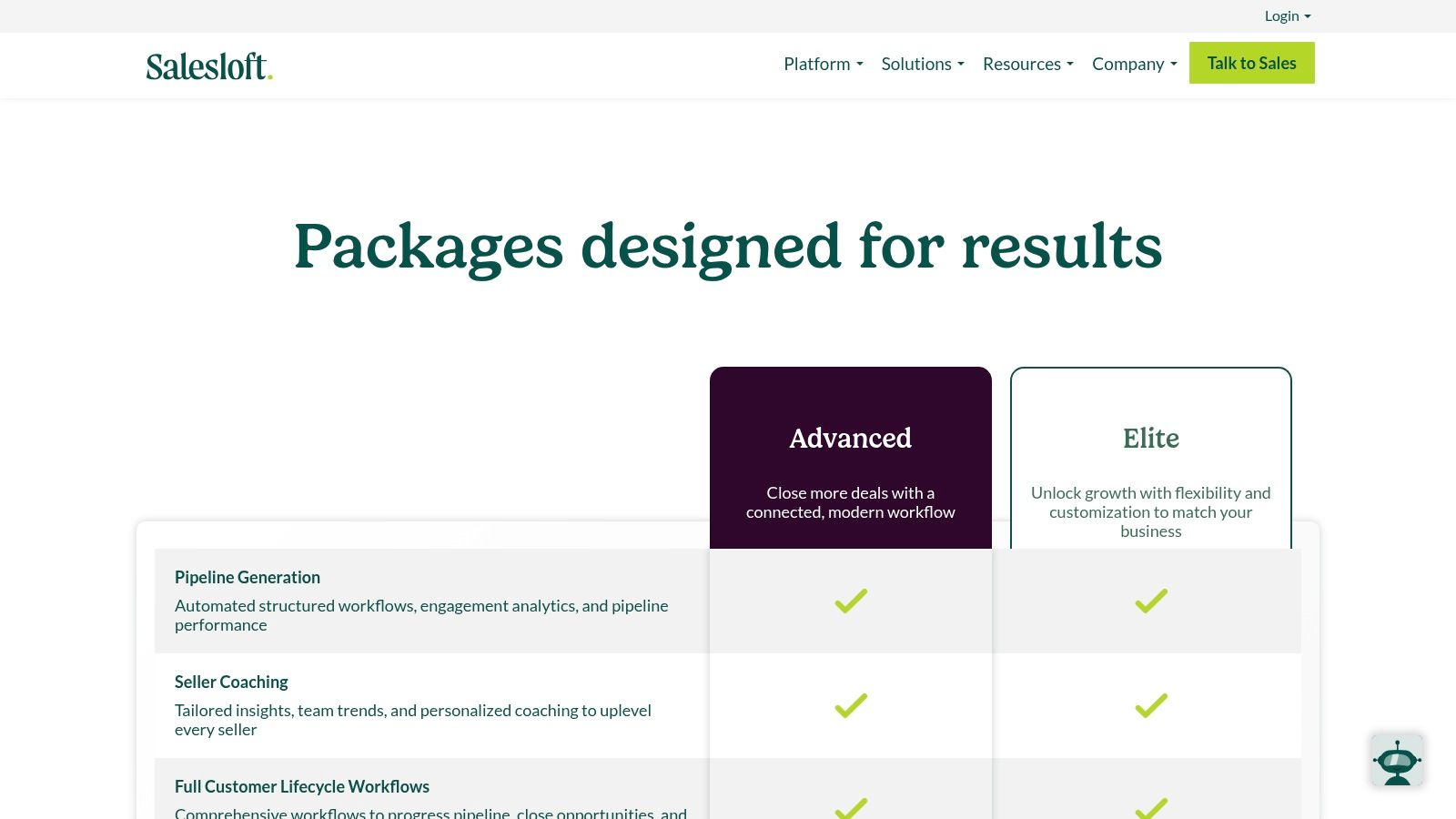
Salesloft is a revenue workflow platform focused on coaching and operational rigor. It combines cadence automation, a native dialer, and conversation intelligence. Salesloft excels at standardizing seller activity through "Cadences" that automate multi-touch, multichannel outreach.
- Pros: Mature platform with strong coaching and analytics; scales to larger teams with robust governance.
- Cons: No public pricing; enterprise orientation may be too heavy for some SMBs.
- Pricing: Available upon request and customized based on team size and needs.
Intelligence and prospecting tools
6. Apollo.io
Apollo.io merges sales intelligence with engagement, combining a large contact database with tools like sequencers and a dialer. This integrated approach makes it one of the best sales automation tools for sales development teams who need to source, enrich, and engage prospects from a single platform, streamlining the top of the funnel.

- Pros: Combines data and engagement tools affordably; excellent free plan for testing.
- Cons: Credit-based system can be limiting; advanced features require higher-tier plans.
- Pricing: Free-forever plan available. Paid plans start at $49/user/month. An effective Apollo.io list verification process is key.
7. LinkedIn Sales Navigator
LinkedIn Sales Navigator is a high-powered intelligence platform that fuels automated outreach. It leverages LinkedIn’s vast professional network to provide deep insights into accounts and leads, making it essential for B2B sales. Its direct access to live, self-updating data offers real-time signals impossible to find elsewhere.
- Pros: Unparalleled access to LinkedIn’s live professional graph; strong buyer intent signals.
- Cons: Higher tiers require direct sales contact for a quote.
- Pricing: Starts at $99.99/user/month.
Other notable mentions
- Pipedrive: An SMB-focused CRM with a highly visual pipeline and intuitive workflow automation.
- Zoho CRM: A versatile and affordable all-in-one platform with deep automation capabilities for its price point.
- Freshsales: A user-friendly CRM with built-in multichannel communication tools (phone, chat, email).
- G2: A software marketplace for discovering and comparing tools based on verified user reviews.
- Salesforce AppExchange: An essential marketplace for extending Salesforce with specialized, pre-vetted applications.
What is the future of sales automation?
The future of sales automation lies not in configuring individual tools, but in expressing intent to an intelligent system. The goal is to move from being a mechanic, constantly tinkering with siloed parts, to becoming the architect of a cohesive revenue engine. This requires a fluid, adaptable layer that can coordinate actions across your entire tech stack. The implication is profound: instead of managing software, sales leaders will manage systems.
The most powerful automation isn't just about doing things faster; it’s about doing the right things at the right time. By focusing on intent rather than configuration, you can build a sales machine that not only saves time but actively accelerates growth. The real transformation comes from connecting your best-in-class tools into a single, intelligent workflow.
Ready to architect your revenue engine?
Start automating now
Frequently asked questions
What are sales automation tools used for?
They automate repetitive sales tasks like data entry, lead routing, email follow-ups, and scheduling. This allows sales reps to spend more time on high-value activities such as building relationships with prospects and closing deals.
What is the difference between CRM and sales automation?
A CRM is a system of record for managing customer relationships and data. Sales automation is the engine that acts on that data, executing workflows like sending sequences or creating tasks based on triggers within the CRM.
How do I start with sales automation?
Begin by mapping your current sales process and identifying the most time-consuming manual tasks. Start with a simple workflow, like automating follow-up reminders, and gradually build more complex automations as you gain confidence and see results.
Is sales automation expensive?
It doesn't have to be. Many tools, like HubSpot and Zoho, offer free or low-cost starting tiers. AI automation platforms like CodeWords provide free credits to start. The key is to choose a tool that provides a return on investment by saving time and increasing efficiency.