The 11 best n8n alternatives for AI automation in 2026
Explore 12 top n8n alternatives for AI-native automation to build smarter workflows.
 Rebecca Pearson13 min read
On this page
Workflow automation is a form of creative transformation, turning manual processes into efficient, self-running systems. While n8n offers powerful self-hosted automation, its node-and-wire model can become a tangled web, hard for non-technical teams to build and maintain. The best n8n alternatives prioritize AI-native interfaces over the complexities of visual construction. Gartner projects that by 2025, over 70% of new applications developed by organizations will use low-code or no-code technologies (2023), proving the demand for accessible creation. This guide shows you platforms that let you build with language, not just lines and boxes.
Wrestling with intricate node layouts and managing self-hosted instances feels less like building and more like constant maintenance. You spend more time untangling connections than benefiting from the automation itself. This guide promises to transform that experience by showing you how to build powerful, multi-step workflows in minutes, not hours. The solution is simpler than you think: for many business processes, describing an automation's logic is far more efficient than building it visually.
Unlike generic AI automation posts, this guide will show you real CodeWords workflows — not just theory. We will explore twelve leading platforms, each analyzed with screenshots, direct links, and practical insights on features, pricing, and ideal use cases. You will get a clear assessment of each tool’s strengths and limitations, enabling you to choose the platform that best aligns with your team’s skills and goals.
What is workflow automation?
Workflow automation uses technology to execute a series of tasks based on predefined rules, minimizing manual intervention. At its core, it’s about creating a logical sequence — a recipe — that connects different software applications to perform a specific function. Instead of manually copying customer data from a form to a CRM and then sending a welcome email, an automation platform orchestrates this entire process automatically. The result is increased efficiency, reduced human error, and more time for strategic work.
Here’s the deal: modern automation is moving beyond simple "if this, then that" triggers. With the integration of AI, these systems can now perform more complex actions, like analyzing the sentiment of a customer review, summarizing a long document, or even generating personalized marketing copy. This evolution turns automation from a simple connector into an intelligent builder, capable of handling dynamic and nuanced business processes.
Why look for an n8n alternative?
While n8n is a powerful and flexible open-source tool, its reliance on a visual, node-based canvas can become a significant bottleneck. As workflows grow in complexity, the screen fills with interconnected nodes that are difficult to debug and maintain. This visual spaghetti requires a specific technical mindset to manage effectively. You might think that a visual builder is inherently easier, but for complex logic, describing the desired outcome in natural language can be far more direct and intuitive than constructing a flowchart.
Furthermore, n8n’s self-hosting model, while offering control, also introduces operational overhead. Teams must manage server uptime, security patches, and resource scaling, which can distract from the primary goal of building effective automations. For many businesses, particularly those in the U.S. where operational efficiency is critical, a managed cloud solution that abstracts away this complexity is a more practical choice. The best n8n alternatives offer this managed experience combined with more intuitive, often AI-driven, interfaces for workflow creation.
How do the top n8n alternatives compare?
ToolPrimary InterfaceIdeal UserKey DifferentiatorPricing ModelCodeWords (Recommended)Conversational AIOperators, Founders, Non-TechBuild/debug via text promptUsage-Based CreditsZapierVisual (Linear)General Business UsersLargest app ecosystem (8k+)Tiered (by Task)MakeVisual (Canvas)Technical Marketers, OpsComplex branching logicTiered (by Operation)PipedreamCode-First HybridDevelopers, EngineersServerless code executionCompute-Based CreditsActivepiecesVisual (Canvas)Startups, DevelopersOpen-source with cloud optionTiered (by Task)WindmillCode-First (Scripts)Engineering TeamsGit-native workflowsPer-Seat + Compute
That’s not the full story. Let's look at each tool individually.
What are the best n8n alternatives in 2025?
Here are the 12 best n8n alternatives for building powerful AI-driven automations.
1. CodeWords
CodeWords redefines workflow creation by replacing the visual canvas with a chat-native, conversational interface. Instead of dragging and connecting nodes, you simply describe the desired automation to Cody, its AI assistant. Cody then handles the entire process: generating code, configuring connections, testing for errors, and deploying the workflow. This approach makes automation dramatically more accessible for non-technical users like founders and operators, who can build their first useful workflow in in minutes.
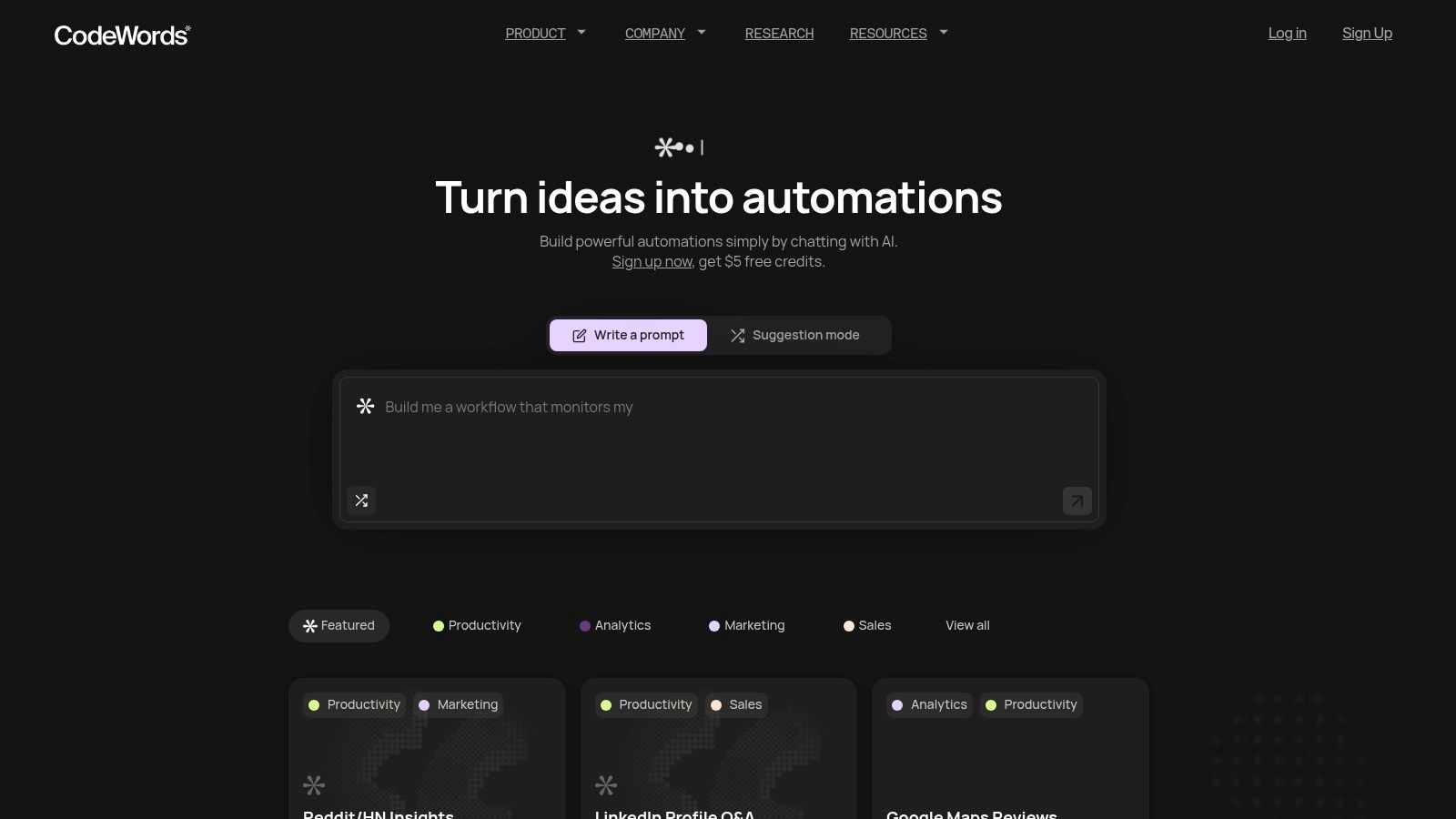
CodeWords excels where many visual builders become complex. It integrates with 3,000+ applications, ensuring broad connectivity. The growing template gallery provides immediate value for common tasks. Community members report reclaiming 5–10 hours weekly.
Pricing:
- Free Plan: Includes starter credits.
- Pro Plan: $39/month with 60 monthly credits..
- Business Plan: $100/month with 200 monthly credits.
Best For: Founders, operators, and sales teams who need to build and iterate on automations quickly without technical barriers.
Website: https://codewords.ai
2. Zapier
As one of the most established names in no-code, Zapier serves as a powerful and user-friendly n8n alternative. Its primary advantage is an enormous ecosystem of over 8,000 official app integrations and a vast library of pre-built "Zap" templates. Instead of building from scratch, users can often find a ready-made Zap that connects their essential tools, such as syncing new leads from Facebook Lead Ads directly to a Salesforce campaign. A 2024 Zapier report notes that 61% of small businesses using automation report higher revenues.
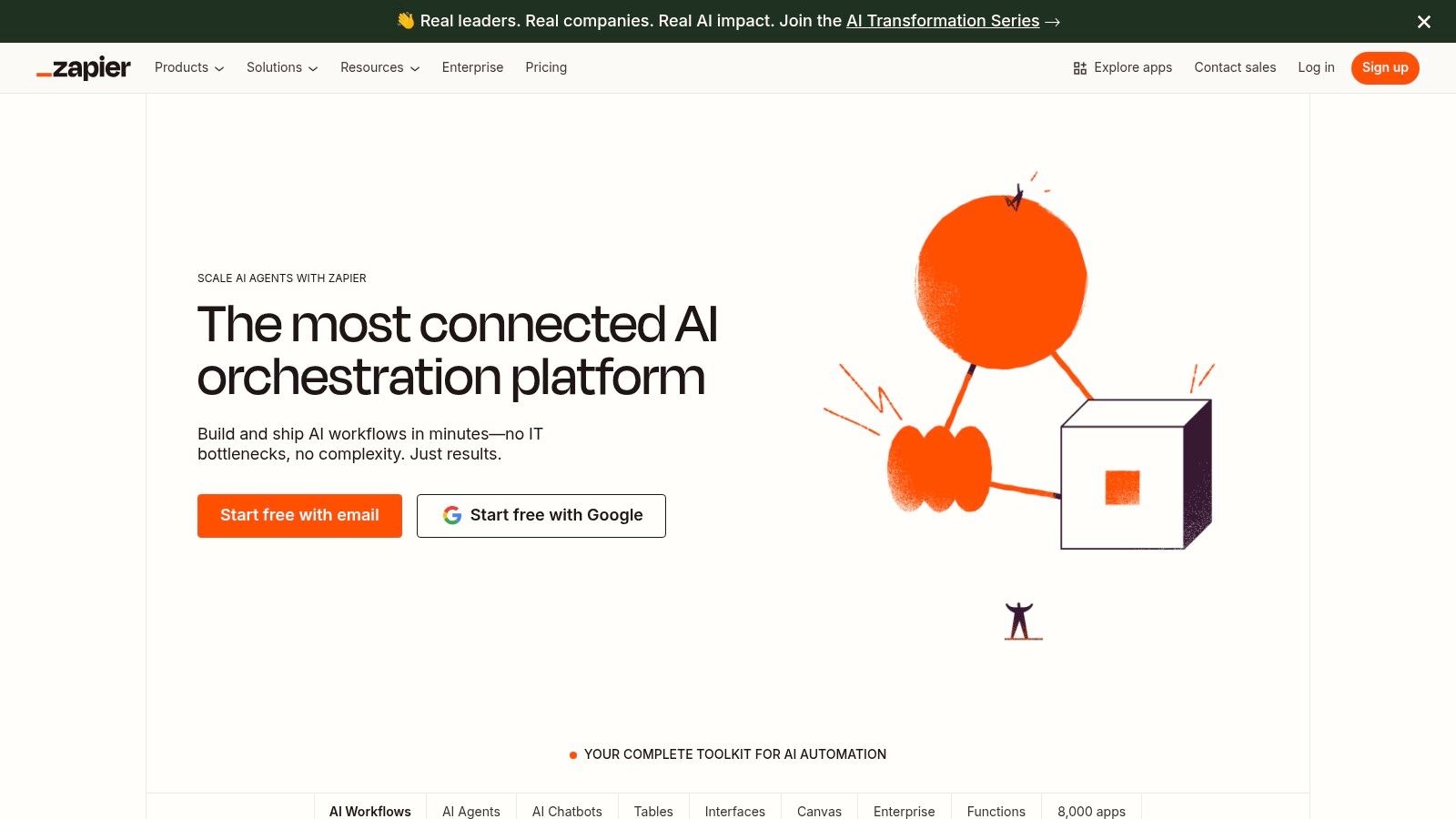
Zapier balances accessibility with features like Paths and Filters for conditional logic. While its task-based pricing can become expensive at high volumes, its strong team features make it a reliable choice for organizations.
Best For: Business teams in marketing, sales, and operations who need a reliable way to connect mainstream SaaS applications without code.
Website: https://zapier.com
3. Make (formerly Integromat)
Make is celebrated for its highly visual and intuitive automation builder. Make uses a drag-and-drop interface where "scenarios" are built by linking app modules together. This visual approach excels at creating complex, multi-branch workflows, allowing users to see the entire flow of data and control every step with precision. It is a strong contender for those needing detailed process control. For users exploring different platforms, many Make alternatives here offer other approaches.
Its core advantage lies in the detailed configuration options available for each module, including routers and iterators that enable sophisticated data manipulation. Make's pricing is based on "operations," which offers transparency but can require careful planning.
Best For: Operations managers and technical marketers who need to build multi-step automations with complex conditional logic.
Website: https://www.make.com
4. Pipedream
Pipedream is a developer-centric n8n alternative, blending a serverless execution environment with a visual workflow builder. It allows technical teams to inject custom code using Node.js, Python, or Go directly alongside pre-built app integrations. This hybrid approach offers granular control for complex data transformations or unique logic that visual-only platforms cannot easily accommodate. The platform is designed for event-driven architecture, making it a powerful tool for engineers.
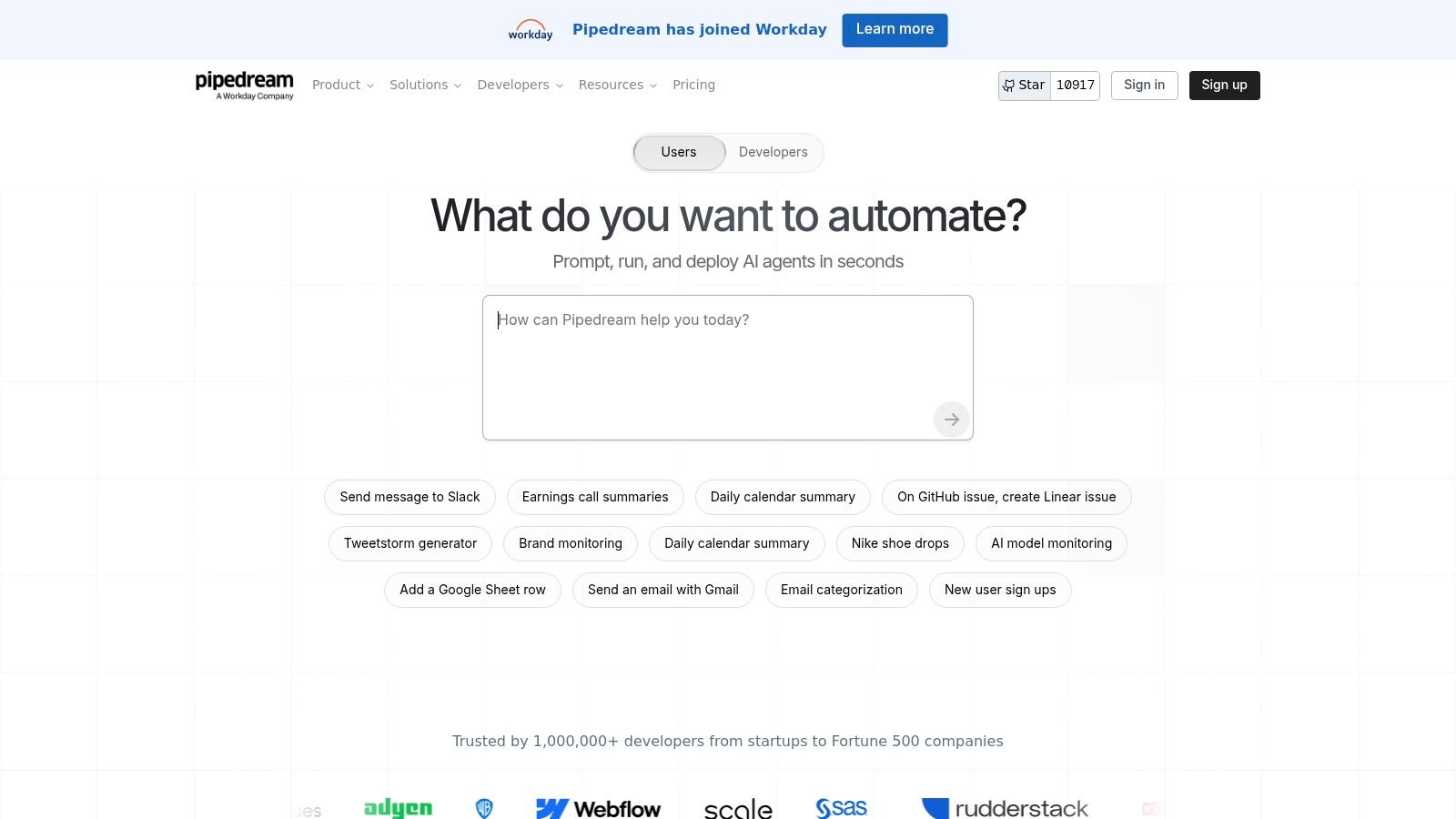
Its pricing model is a significant differentiator, billing for the execution time and memory workflows consume, which rewards efficient code. With a generous free tier and GitHub sync, Pipedream provides an enterprise-ready environment.
Best For: Developers and DevOps engineers who need to build custom integrations and internal tools with precise code-level control.
Website: https://pipedream.com
5. Activepieces
Activepieces offers a flexible, open-source approach to automation, making it a compelling n8n alternative for users who value community-driven development and the option of a managed cloud service. It is designed to be developer-friendly, featuring custom code steps and AI agent capabilities. The platform’s dual-offering model allows teams to start with the MIT-licensed Community Edition for full control before scaling to a managed plan.
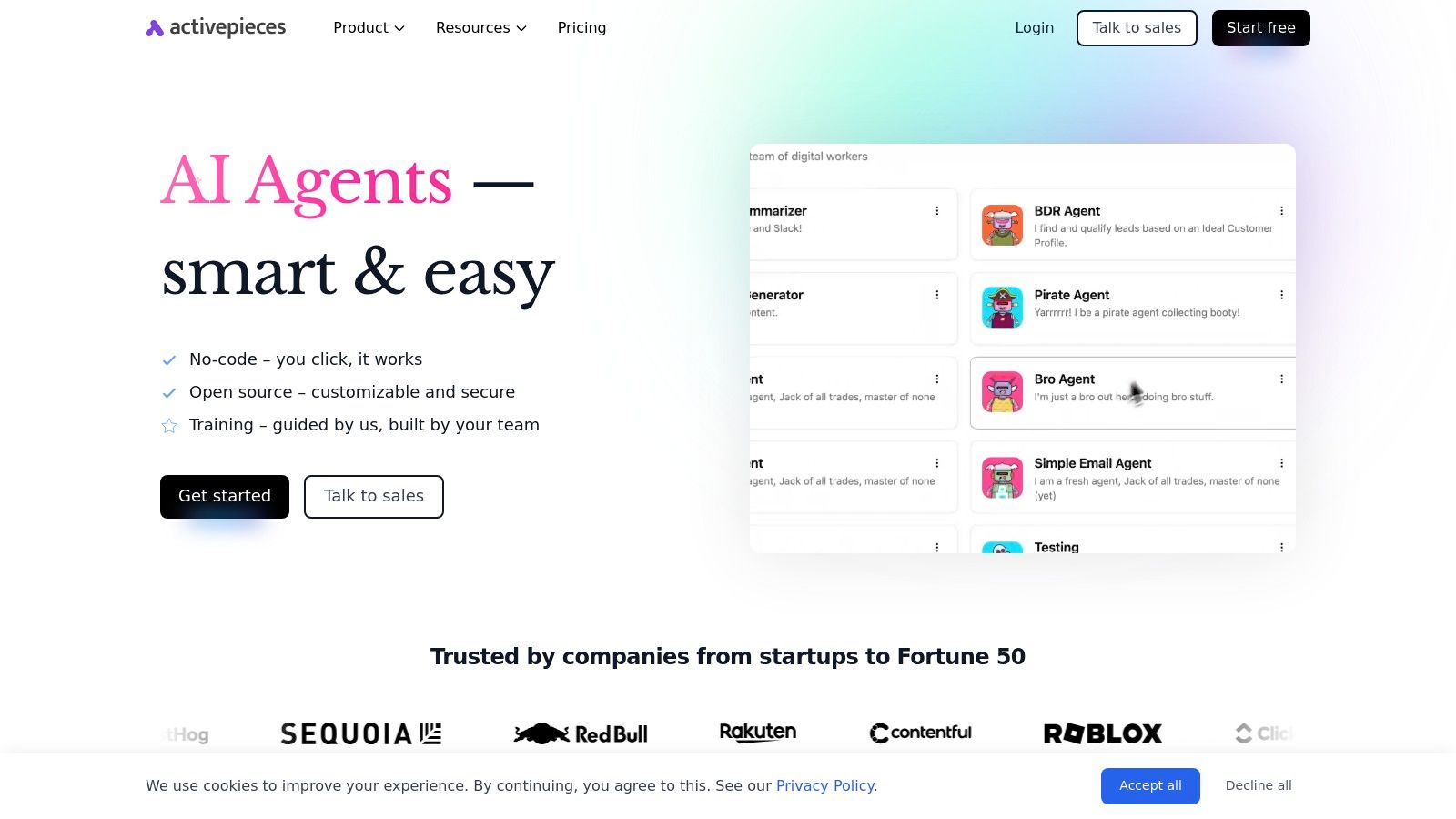
Its core appeal lies in its low-cost entry and a generous "unlimited tasks" philosophy on its paid tiers. This pricing model simplifies cost prediction for growing businesses. Activepieces positions itself as a scalable solution that can grow with a company's needs.
Best For: Startups and developers who want the control of an open-source tool without sacrificing the convenience of a potential cloud migration.
Website: https://www.activepieces.com
6. Integrately
Integrately positions itself as a remarkably user-friendly n8n alternative, focusing on speed and simplicity with millions of pre-built, one-click automations. This approach is tailored for users who want to connect apps and start workflows immediately without a steep learning curve. The platform emphasizes a "ready-made" experience, allowing you to select your apps and activate a pre-configured workflow in seconds.
Its core appeal lies in an accessible interface and competitive, task-based pricing. With over 1,400 app integrations, it provides a solid foundation for common business automation needs, making it a scalable option for teams that prioritize ease of use.
Best For: Small businesses and marketers who need a straightforward tool to automate standard processes without technical details.
Website: https://integrately.com
7. Workato
Workato is an enterprise-grade Integration Platform as a Service (iPaaS), making it a powerful, high-end n8n alternative. It is designed for complex, multi-departmental deployments where governance and security are paramount. Workato provides a robust framework for organization-wide automation, complete with extensive audit logs and role-based access controls. Its architecture is built to handle mission-critical processes.
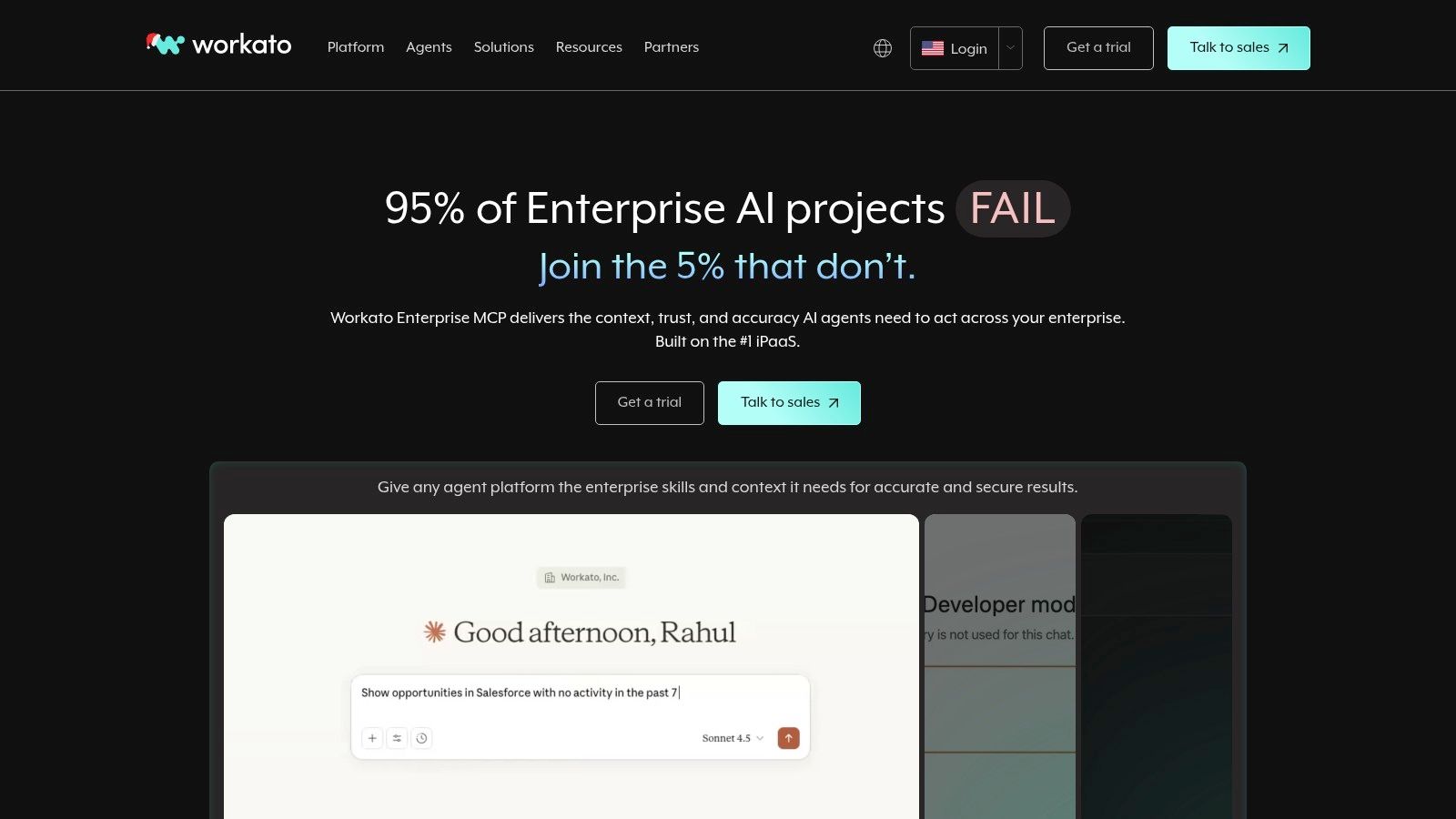
The platform features "Workflow Apps" which allow for human-in-the-loop automations, a critical feature for processes needing manual approval. Pricing is not publicly available and requires a direct sales engagement, reflecting its target market.
Best For: Large enterprises and IT departments tasked with managing automation across the entire business, such as complex employee onboarding.
Website: https://www.workato.com
8. Tray.io
Tray.io is an enterprise-grade, low-code platform for departmental automation and embedded integrations. It provides a robust solution for businesses looking to connect complex tech stacks and deliver customer-facing automation. With features like its connector SDK for building custom integrations and the Merlin Agent Builder for deploying AI agents, Tray.io serves as a powerful n8n alternative for teams needing scalability and governance.
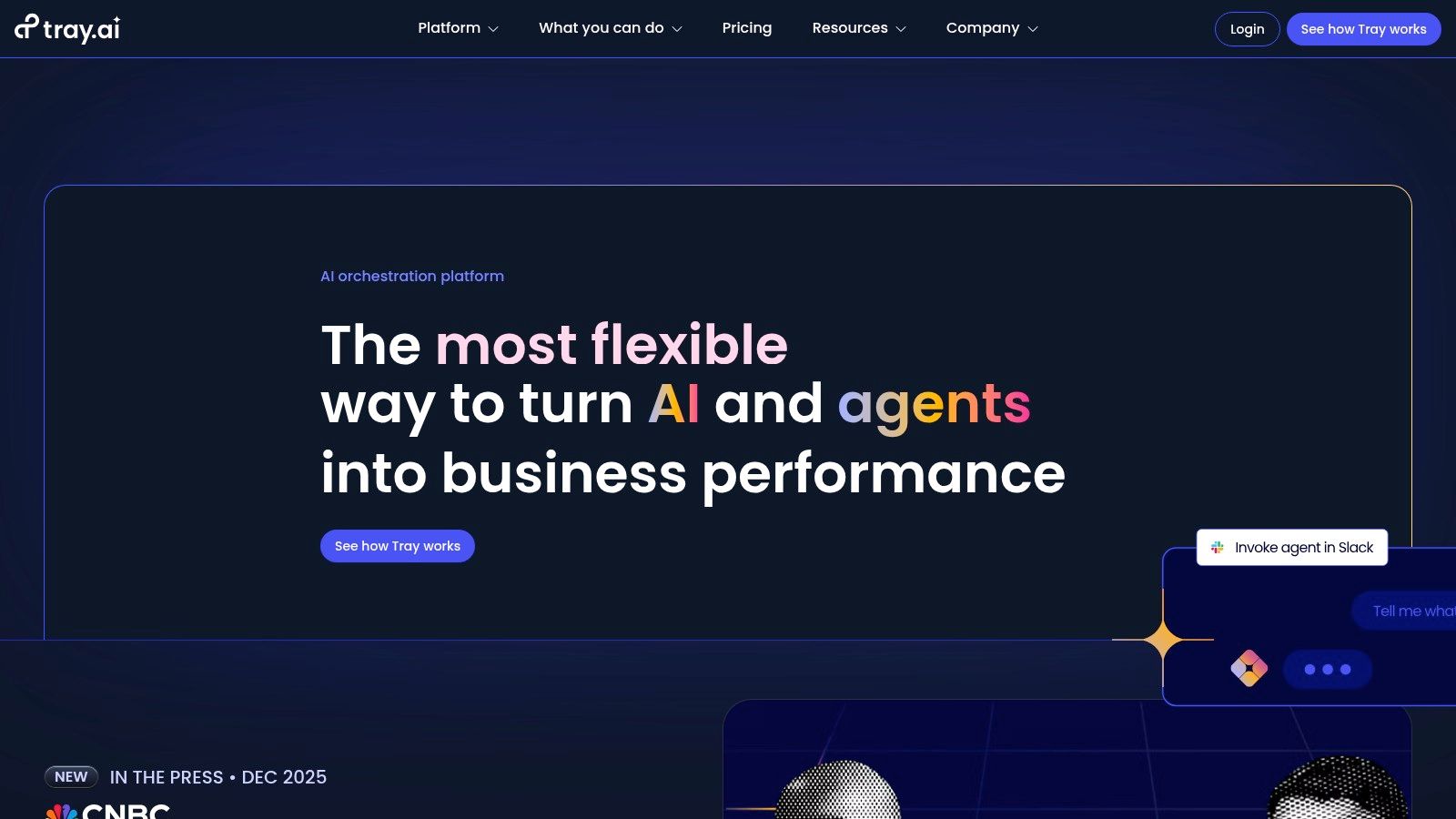
Its core offering revolves around a library of over 600 connectors and tools designed for both internal and product integrations. The platform is architected to handle high-volume, mission-critical workflows, offering enterprise add-ons for security and compliance.
Best For: Established companies and SaaS businesses that require a scalable and secure platform for internal processes or embedded customer integrations.
Website: https://tray.io
9. Windmill
Windmill is a powerful, developer-centric n8n alternative, blending open-source flexibility with enterprise features. It is engineered for technical users who want to build complex automations and internal tools using Python and TypeScript. Instead of a purely visual interface, developers can write, version, and deploy scripts directly within a workflow, syncing everything with their Git repositories for true DevOps alignment.
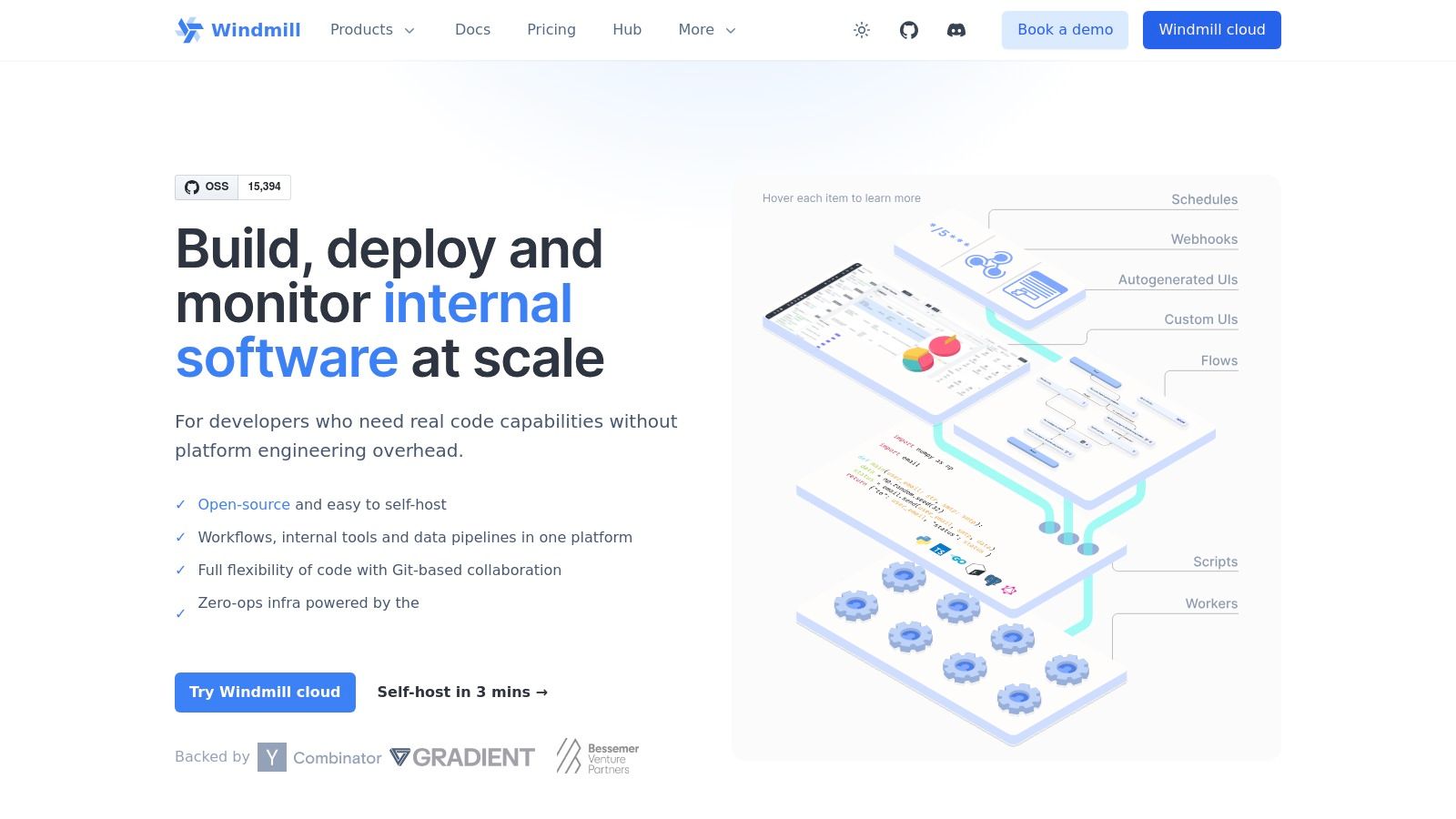
Its core value is providing an extensible, self-hostable platform that eliminates vendor lock-in. The open-source version is highly capable, and an enterprise edition offers advanced security and governance for businesses.
Best For: Engineering teams and data scientists who need to orchestrate complex data pipelines or manage infrastructure with code.
Website: https://www.windmill.dev
10. Node-RED
Node-RED offers a browser-based flow editor for wiring together hardware devices, APIs, and online services. Originally from IBM, it has become a staple in the IoT community and serves as a highly extensible, open-source n8n alternative. Its visual, flow-based programming model is intuitive for developers who want to quickly connect event-driven systems.
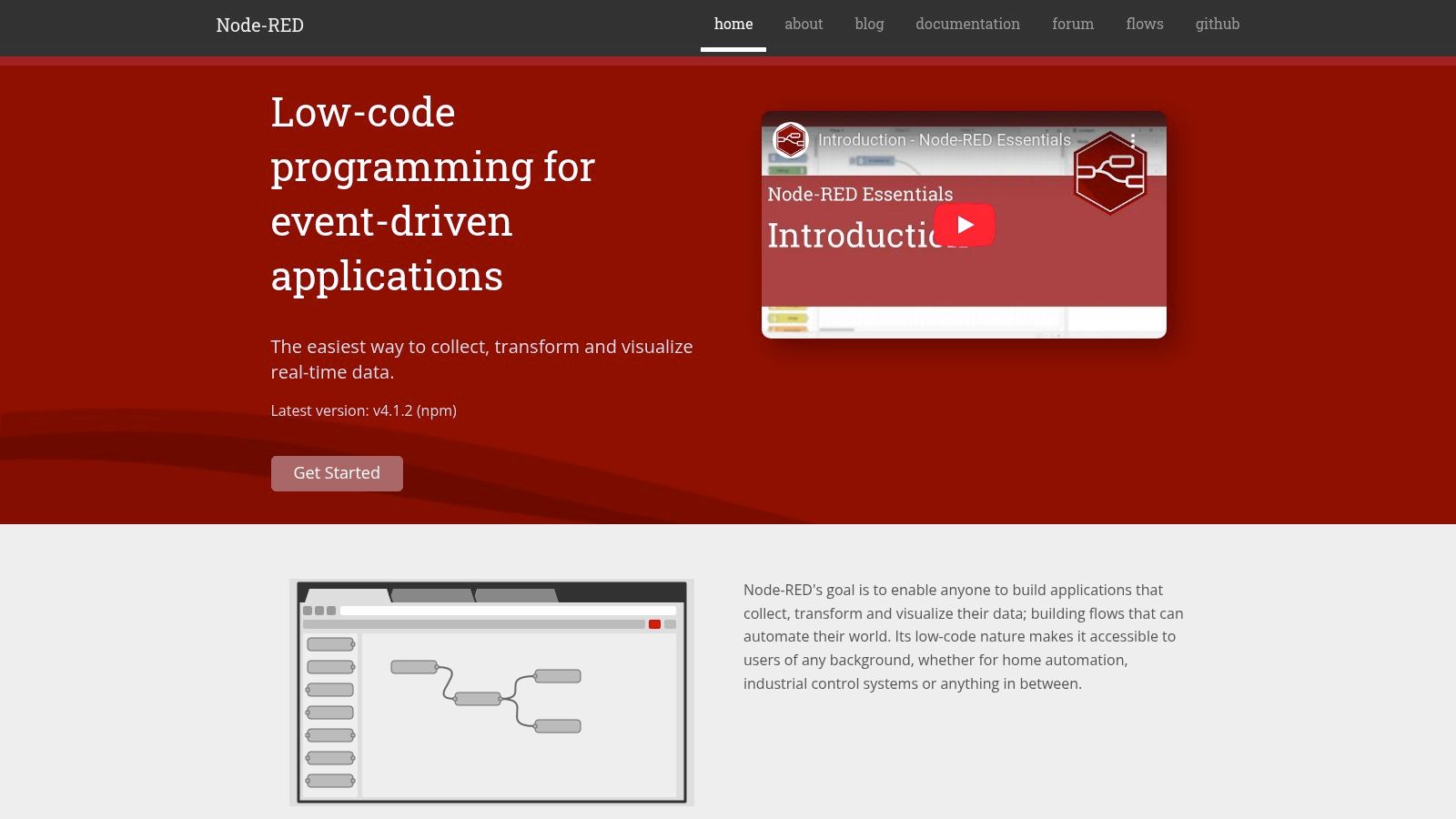
The platform's strength is its massive community and ecosystem of over 5,000 community-contributed "nodes." Because it can run locally on hardware like a Raspberry Pi or in the cloud, it provides ultimate control over data privacy and costs.
Best For: Developers, engineers, and hobbyists focused on IoT projects, hardware integrations, and event-driven architectures.
Website: https://nodered.org
11. Pabbly Connect
Pabbly Connect provides a cost-effective n8n alternative focused on delivering high value through task-based pricing without restricting premium features. Unlike many competitors that gate essential functionalities like routers or unlimited workflows behind expensive tiers, Pabbly offers these capabilities across all its plans. This straightforward approach makes it an attractive option for small businesses and agencies managing multiple client accounts.
Its interface is clean and user-friendly, supporting over 1,500 app integrations. While its ecosystem is not as vast as Zapier's, it covers most common business applications, allowing for the creation of multi-step automations with conditional logic. The transparent pricing and feature parity across plans are its main selling points.
Best For: Small businesses, agencies, and solopreneurs looking for a budget-friendly automation tool with powerful features included at every price point.
Website: https://www.pabbly.com/connect/
How do you choose the right automation platform?
Navigating the sea of n8n alternatives can feel like trying to choose the right spellbook without knowing what kind of magic you want to cast. The common belief is that more visual nodes and connectors equal more power. The opposite is often true for non-technical teams. Complex visual builders can quickly become tangled webs that are difficult to manage and debug, turning the promise of simple automation into a frustrating puzzle.
This is where a fundamental shift in approach becomes critical. Instead of forcing your logic into a visual flowchart, what if the tool could understand your logic from natural language?
The most powerful automation platforms are not just those with the longest list of integrations, but those that reduce the friction between idea and execution. For a broader perspective on tool capabilities, it is helpful to review guides on the best API integration platforms, as powerful integration is the backbone of effective automation. The ultimate goal is to find a tool that empowers you to build using the skills you already have. This is the shift from low-code to no-code, and now, from visual-first to AI-first. The future of automation is not about learning a new system — it is about having a system that learns from you.
By choosing a platform that mirrors your team's natural communication style, you aren't just selecting an n8n alternative; you are fundamentally changing your operational capacity. You’re equipping your team to build, iterate, and deploy solutions faster than ever, transforming automation from a technical hurdle into a creative advantage.