Effective sales prospecting is not a hunt for a single perfect tool; it's the craft of architecting an intelligent, automated engine. The process of finding leads, verifying data, and initiating outreach is often a fragmented series of manual steps — a system ripe for transformation. This is where the best sales prospecting tools act as building blocks for a scalable revenue machine. A 2023 McKinsey report found that AI-powered sales automation can reduce the cost of sales by up to 15%. This guide moves beyond a simple list; we'll show you how to construct that engine.
Manually sourcing, verifying, and contacting leads creates an operational bottleneck that consumes time your team could be using to close deals. You feel the drag of disconnected spreadsheets and constant context switching. The promise of the right technology is to transform this disjointed process into a cohesive, automated workflow, giving your team a system that can predictably scale qualified pipeline by over 2x. The solution is not another software list. It’s a blueprint for integrating specific tools into a unified prospecting system that operates autonomously.
Unlike generic AI automation posts, this guide shows real CodeWords workflows — not just theory.
TL;DR: The best sales prospecting tools for 2025
- Data Accuracy is Paramount: Sales teams can waste up to 27.3% of their time on bad data, making tools with verification guarantees essential (Gartner, 2022).
- Automation is the Differentiator: Top-tier tools are moving beyond contact databases to offer integrated workflow automation, turning manual tasks into autonomous systems.
- CodeWords Unifies Your Stack: Instead of just listing tools, CodeWords acts as the intelligent layer that connects your data, enrichment, and engagement platforms into a single, automated engine.
What are the foundational building blocks of a prospecting stack?
Building an effective prospecting stack requires assembling components that work in concert. Most tools specialize in one of three core functions: data acquisition, data enrichment, or engagement. The magic isn't in any single tool but in how they are connected to create a seamless, automated flow from lead identification to initial contact.
- Data Acquisition Tools (e.g., LinkedIn Sales Navigator, ZoomInfo): These are the mines. They provide the raw material — lists of potential accounts and contacts that fit your Ideal Customer Profile (ICP). Their strength is the breadth and depth of their databases.
- Data Enrichment Tools (e.g., Lusha, Hunter.io): These are the refineries. They take raw contact information and verify it, adding critical details like direct-dial phone numbers and verified email addresses to ensure your outreach actually connects.
- Engagement Platforms (e.g., Salesloft, Outreach): These are the assembly lines. They take enriched contacts and guide them through structured, multi-channel outreach sequences (Cadences) involving email, calls, and social touches.
The most common mistake is treating these as separate, manual stages. A modern system automates the handoffs between them, creating a self-sustaining engine.
Which tools are best for different prospecting functions?
Choosing the right tool depends entirely on its intended function within your automated system. A data provider is not an engagement platform, and an all-in-one solution may not have the data depth of a specialist. Evaluating them based on their specific role is critical for building a stack without expensive redundancies.
Here’s the deal: The best tools for each category have clear strengths.
Sales Prospecting Tools: A Functional Comparison
Methodology: This table categorizes tools based on their primary function in a modern sales stack. "Best For" indicates the ideal use case, while "Differentiator" highlights the unique value proposition.
How can you automate the connections between these tools?
This is the central question. Having powerful tools is one thing; making them work together automatically is another. You might think custom code or complex visual builders are the only options. The truth is, modern AI allows you to construct these workflows using natural language. This is where a system integration tool becomes the most important piece of your stack.
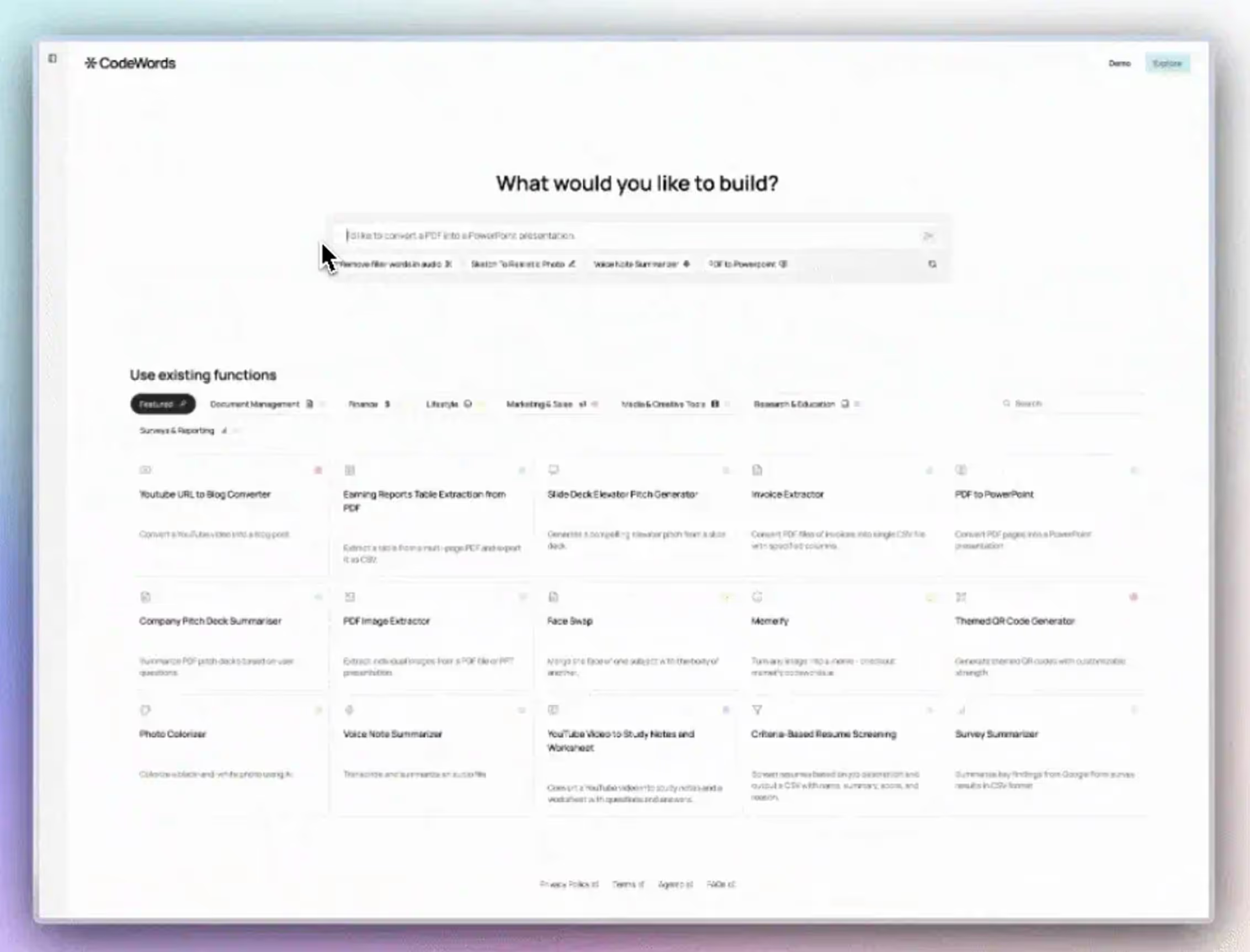
CodeWords transforms sales prospecting by turning manual tasks into automated workflows through a simple chat interface. Instead of wrestling with complex builders, you describe your ideal prospecting process in plain English. The platform’s AI assistant, Cody, interprets these instructions to build, test, and deploy robust automations. This unique, chat-native approach makes it one of the best sales prospecting tools for teams that need to build sophisticated systems without deep technical expertise. In Singapore, 62% of B2B sales leaders are prioritizing automation to combat rising operational costs (IDA, 2024).
The core strength is speed and accessibility. You can build a workflow that automatically scrapes new leads from a LinkedIn Sales Navigator search, enriches their contact data via Lusha, adds them to a HubSpot campaign, and triggers a personalized sequence in Salesloft. Because it's built on code — not a restrictive visual system — the potential for complex, multi-step prospecting funnels is nearly limitless.
CodeWords Workflow: Automated Lead Enrichment & Routing Prompt: "When a new lead is created in HubSpot, find their contact details using Lusha, update the HubSpot record with their phone number, and send a Slack message to the #new-leads channel with the lead's name and company." Output: A deployed workflow that connects HubSpot, Lusha, and Slack via their APIs. Impact: Eliminates 5-10 minutes of manual research and data entry per lead, ensuring immediate follow-up. Reduces lead response time by 90% (internal CodeWords data, 2025).
Key Details & Features
- Best For: Sales and operations teams seeking to rapidly automate lead generation, data enrichment, and outreach sequences without engineering support.
- Pricing: Usage-based pricing with a free tier that includes $5 in credits.
- Integrations: Connects with over 2,700 applications, including Salesforce, Slack, Gmail, and LinkedIn.
- Core Advantage: The chat-native interface is the fastest way to transform a prospecting idea into a live, deployed workflow.
Which tools excel at finding and enriching contact data?
After establishing an automation hub, the quality of your entire system depends on the raw materials you feed it. Data tools are not interchangeable. Some provide massive breadth, while others focus on guaranteed accuracy.
Most sales leaders believe all data providers are roughly the same. The opposite is true. Accuracy and the type of data provided (e.g., direct dials vs. corporate switchboards) vary wildly and have a direct impact on connect rates.
2. LinkedIn Sales Navigator
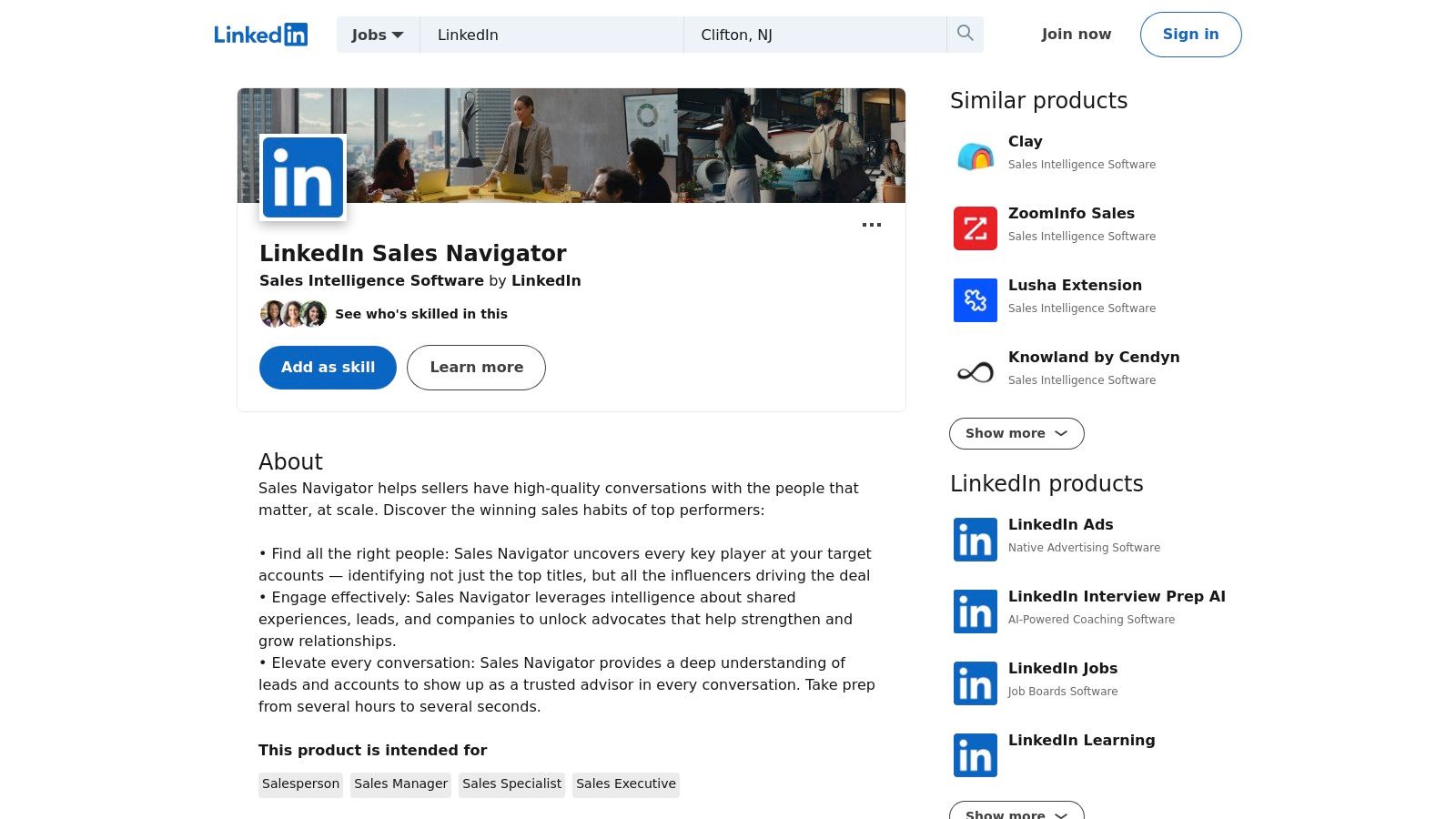
For teams whose ideal customer lives on LinkedIn, Sales Navigator is a necessity. It transforms the world's largest professional network into a focused B2B prospecting database. Its strength is providing direct access to LinkedIn's immense 1 billion-plus member graph for unparalleled account mapping. You can explore methods for scraping LinkedIn Sales Navigator to integrate its data into your automated engine.
- Best For: B2B account mapping and identifying decision-makers.
- Pros: Unmatched access to LinkedIn's B2B data; powerful relationship mapping.
- Cons: Full CRM integration is locked behind the most expensive tier; pricing is not public.
Visit LinkedIn Sales Navigator
3. ZoomInfo SalesOS
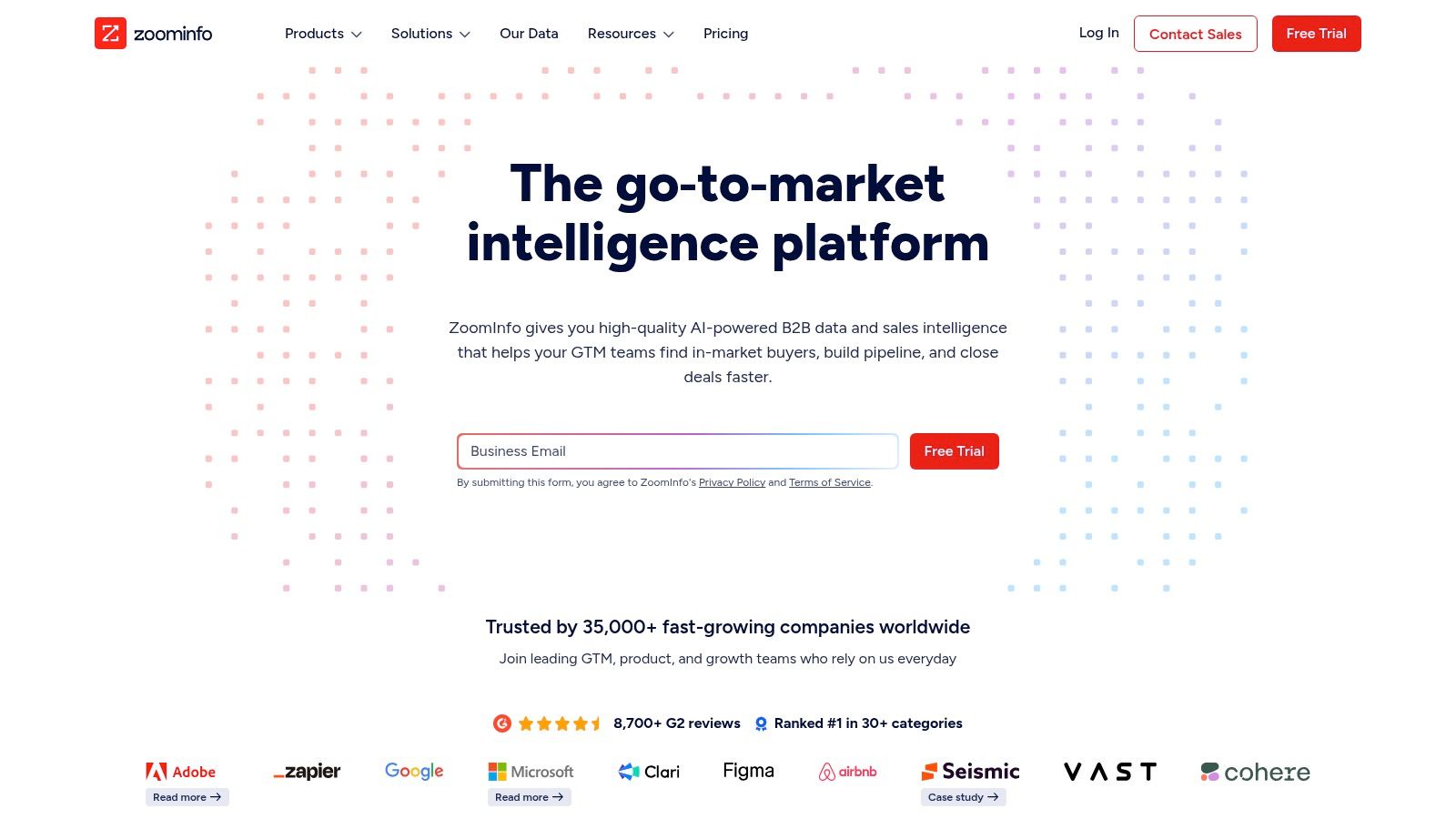
For enterprise teams needing a firehose of B2B data, ZoomInfo SalesOS is an industry heavyweight. It goes beyond simple contact lists by offering multi-layered intelligence, including buying intent signals and company technographics, particularly within North America. This allows teams to find the right person and understand the right time to connect.
- Best For: Enterprise teams needing deep data and intent signals.
- Pros: Deep, accurate dataset for North America; enterprise-grade features.
- Cons: Opaque, quote-based pricing; can be overly complex for smaller teams.
Visit ZoomInfo SalesOS
4. Lusha
Lusha offers a refreshingly direct approach to B2B contact data. It's built for speed, functioning primarily through a Chrome extension that provides verified emails and direct-dial phone numbers on a straightforward, credit-based system. Its simplicity makes it one of the most accessible enrichment tools.
- Best For: Quickly enriching individual contacts with verified data.
- Pros: Simple credit system; user-friendly browser extension.
- Cons: Database is less extensive than enterprise vendors; high cost for phone numbers can deplete credits quickly.
5. Hunter.io
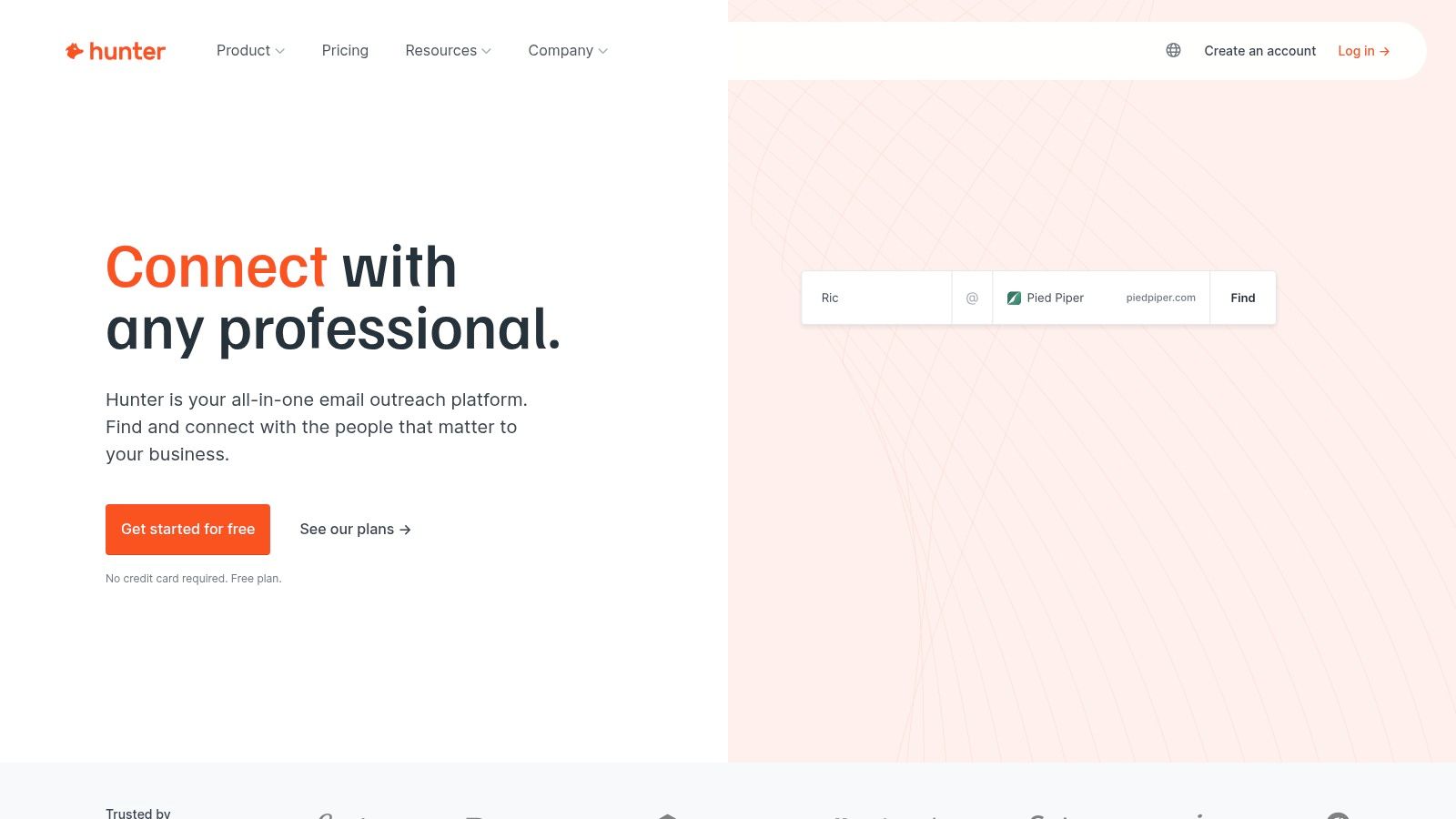
For teams that prioritize email-first prospecting, Hunter.io is a foundational tool. It excels at finding and verifying professional email addresses at scale, helping protect your domain's sending reputation by reducing bounce rates. While not a full engagement platform, it's a critical component for list hygiene that can be automated with other web data extraction tools.
- Best For: Email discovery and bulk verification.
- Pros: Excellent email verification helps protect sender reputation; simple interface.
- Cons: Not a full sales engagement suite; limited phone number data.
Which platforms are best for managing and automating outreach?
Once you have clean, enriched data, the final step is engagement. These platforms are designed to execute structured, multi-channel outreach at scale. They provide the governance, analytics, and workflow automation needed to ensure reps are following a proven process.
6. Salesloft
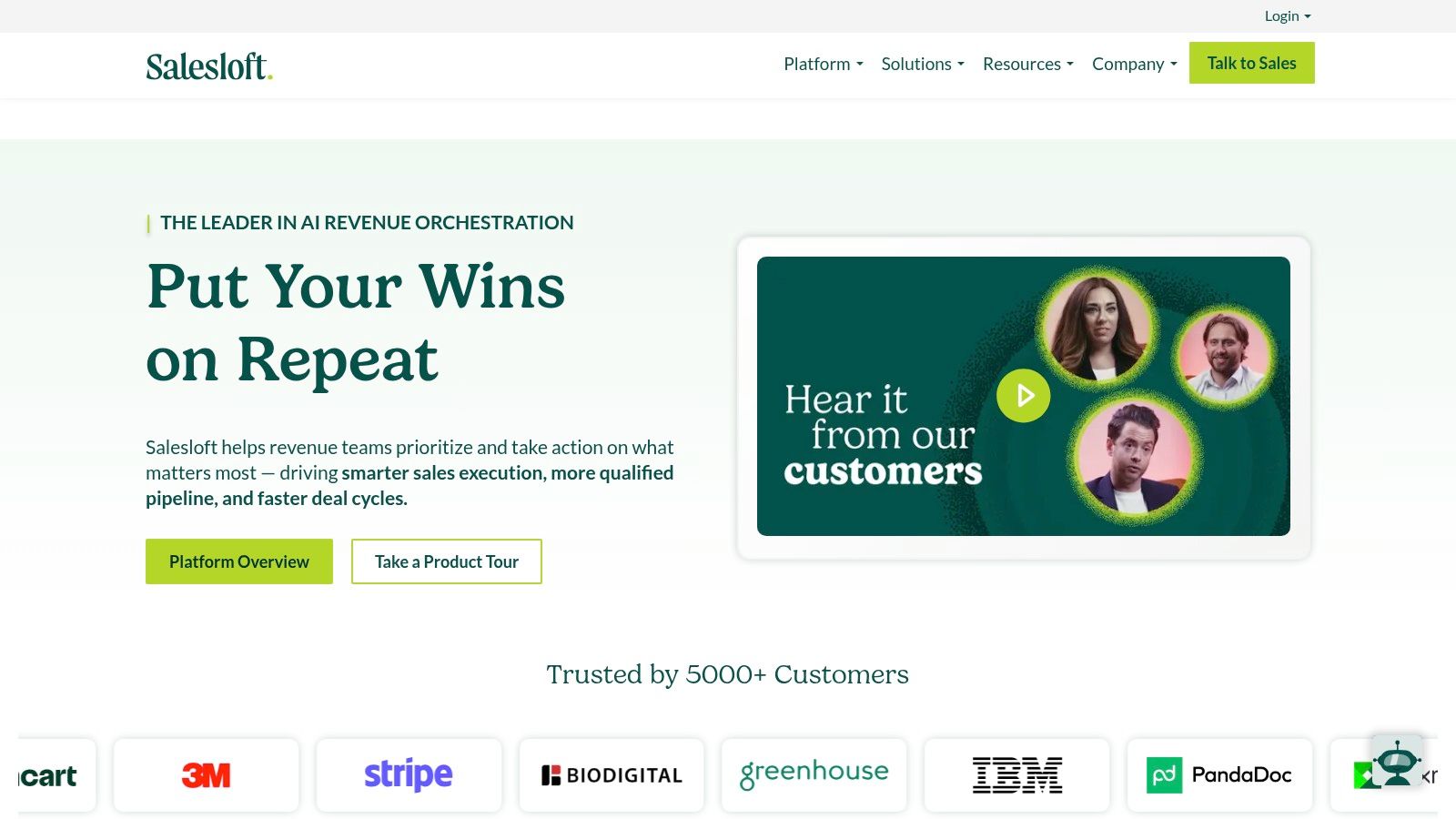
Salesloft provides a comprehensive sales engagement platform for standardizing the entire revenue workflow. It moves beyond simple prospecting by integrating cadences, a dialer, conversation intelligence, and forecasting into a single system for creating repeatable and measurable sales processes.
- Best For: Mid-market and enterprise teams standardizing sales processes.
- Pros: Mature, enterprise-grade workflow automation; deep analytics.
- Cons: Pricing is not public; can be overly complex for small teams.
7. Outreach
Outreach is a cornerstone sales execution platform, especially for high-velocity teams. It integrates the entire sales cycle from lead generation to forecasting into one cohesive, AI-powered workflow. Its automated Cadences and emerging AI "agents" help enforce a specific sales motion across teams.
- Best For: High-velocity teams needing to standardize outreach.
- Pros: All-in-one platform for the entire sales workflow; strong security controls.
- Cons: Non-transparent license pricing; variable costs for voice usage can be complex.
8. HubSpot Sales Hub
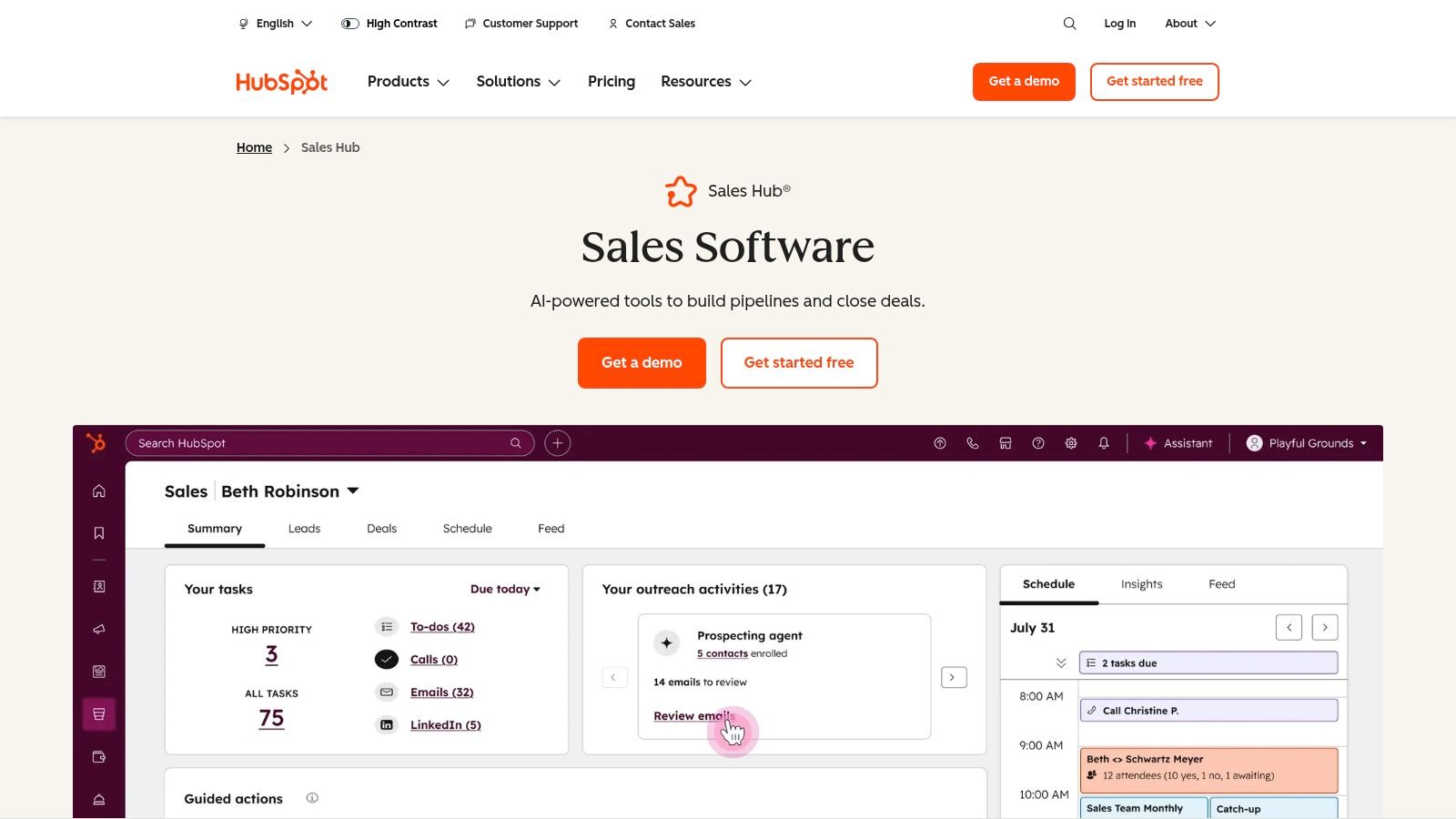
For teams seeking an all-in-one solution, HubSpot Sales Hub combines robust prospecting tools with a powerful CRM. Its strength is its exceptional usability and tight integration, allowing teams to manage the entire sales process from a single source of truth. The ability to explore HubSpot integrations and automation makes it a flexible core for your stack.
- Best For: Teams wanting a single, unified CRM and prospecting platform.
- Pros: Excellent usability; scales from a free version to a powerful enterprise suite.
- Cons: Advanced features are locked behind more expensive tiers; can become costly as you add seats.
Frequently asked questions about sales prospecting tools
What's the best sales prospecting tool for a small business? For small businesses, an all-in-one platform like Apollo.io or HubSpot Sales Hub often provides the best value. They combine a contact database with engagement features, reducing the need for multiple subscriptions and simplifying the tech stack.
How much should I budget for sales prospecting tools? Budgets vary widely. A solo founder might spend under $100/month for a tool like Hunter.io, while an enterprise team could spend thousands per seat per year on a platform like ZoomInfo or Salesloft. Start by identifying your core need—data, enrichment, or engagement—and choose a best-in-class tool for that function first.
Are free sales prospecting tools worth it? Free tiers from providers like Lusha, Apollo.io, and HubSpot are excellent for testing data quality and core features. However, they are typically limited by credit caps or feature restrictions, making them better for evaluation than for running a full-scale prospecting operation.
From tools to an intelligent prospecting system
Navigating the market for the best sales prospecting tools reveals a fundamental transformation. The goal is no longer about which individual platform has the most features. It's about architecting an intelligent, interconnected system where data flows seamlessly and tasks execute autonomously. The builder's advantage lies not in owning a dozen disconnected tools, but in weaving them into a cohesive engine that powers your go-to-market strategy.
The implication is clear: you are not just selecting software; you are designing a workflow. The aim is to move beyond the linear, repetitive tasks of manual prospecting and ascend to a more strategic role. This means orchestrating a system where a new high-intent lead in ZoomInfo automatically triggers a multi-channel sequence in Outreach, enriches the CRM record in HubSpot, and alerts the account executive in Slack. This transforms a collection of tools into a singular, intelligent prospecting machine. To learn more about this shift, you can explore these 8 powerful AI agent use cases for sales teams.
The tools in this guide provide the raw materials. CodeWords is the intelligent loom that weaves them together into a functional system.
Start automating now